
Friday 24th October 2025 in the afternoon
It was a welcome relief to be free from the masses (& Frank Skinner) in the tourist trap of Notting Hill. Turning onto Bayswater Road I briefly surveyed the old Ordnance Survey & decided that I fancied a saunter around the area about St Pauls, that was after I fancied a little teriyaki in a high-street, take-away noodle-bar (not particularly sure if they are all hyphenated, but hey, it’s my blog & as such, can say & do what I like (obviously within reason, as I wouldn’t want to offend anyone (actually, funnily enough, I do seem to offend people quite a lot (Hmmm, must be something to do with my military heritage & being a cantankerous old git)))).
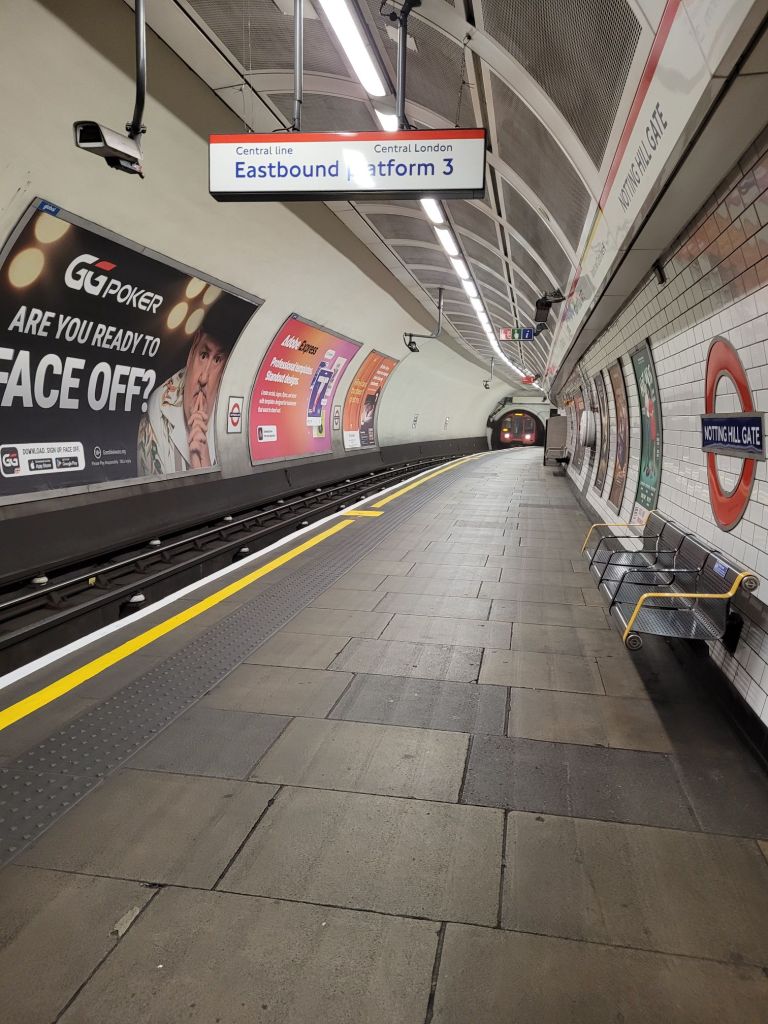
Embarking the Central Line underground train bound for Epping at Notting Hill Gate tube station, over the course of 12 minutes I was rattled, shunted & vibrated under Bond Street, Oxford Circus & Tottenham Court Road, until I arrived thoroughly shaken not stirred at my next destination, St Pauls.
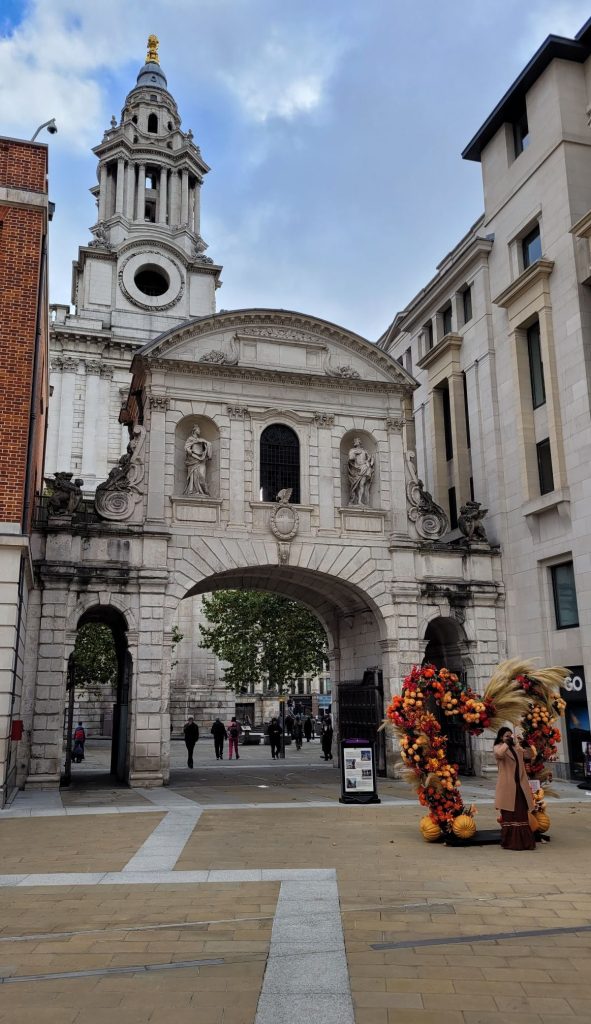
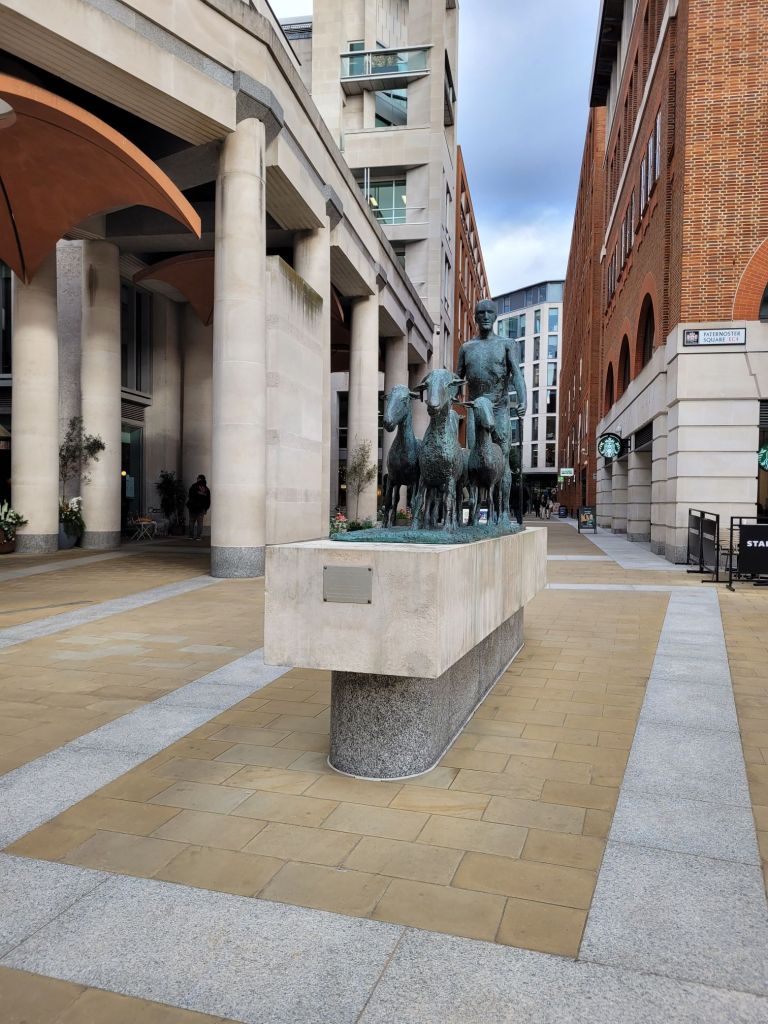
The Cathedral (designed by Sir Christopher Wren & built 1675-1710) itself is one of those places that simply takes my breath away & had I been visiting, I would probably discuss the refinements of it in a little more detail. I wasn’t & so I haven’t. Instead, I wandered around the immaculately kept Paternoster Square & eyed its impressive temporary sculpture of ‘Wild animals on a scooter’ by Gillie & Marc, as well as the more permanent ‘Sheep & shepherd’ by Elizabeth Frink. Tempted as I was to hoof some kids off the scooter so that I could take a brat-free photo for t’gram, I decided against it & surveyed the grand archway that leads back towards St Paul’s, instead. Temple Bar Gate, as I found out (designed again by Sir Christopher Wren & built in 1669-72 by the way)was originally located at the point of demarcation between The Strand & Fleet Street (a ‘bar’ literally being a barrier to block the road & not in this instance, a house of refreshment) & was moved, lock, stock & barrel to Theobald’s House (somewhere in Hertfordshire) in 1880 to become the posh gateway to a wealthy chaps estate. Here it stayed until 2003 when it travelled back (via the Metropolitan Line obviously) to its current location. In light of this I would suggest going down sometime schnell-ish as you never know where it’ll pop-up next.
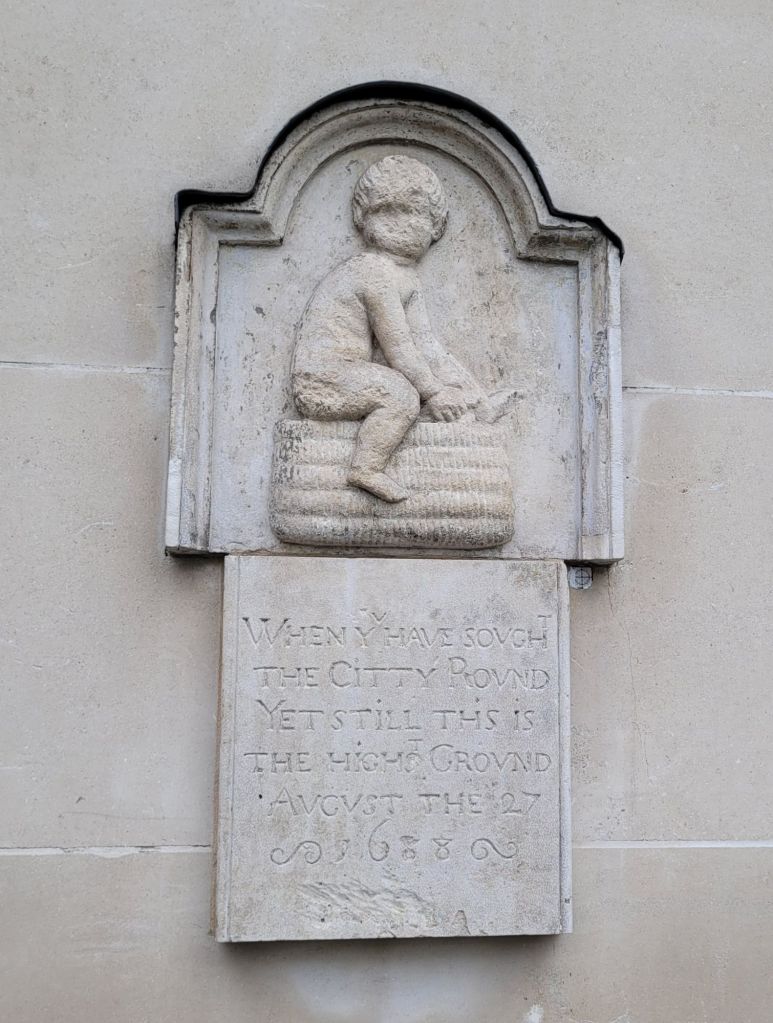
Venturing back across Paternoster Square & onto Paternoster Row, I wandered along Panyer Alley to observe the statue of a baker boy sat atop of a breadbasket. This little chap pays homage to the bakers who’d sell their wares on the streets to avoid paying a tax levied by the king.
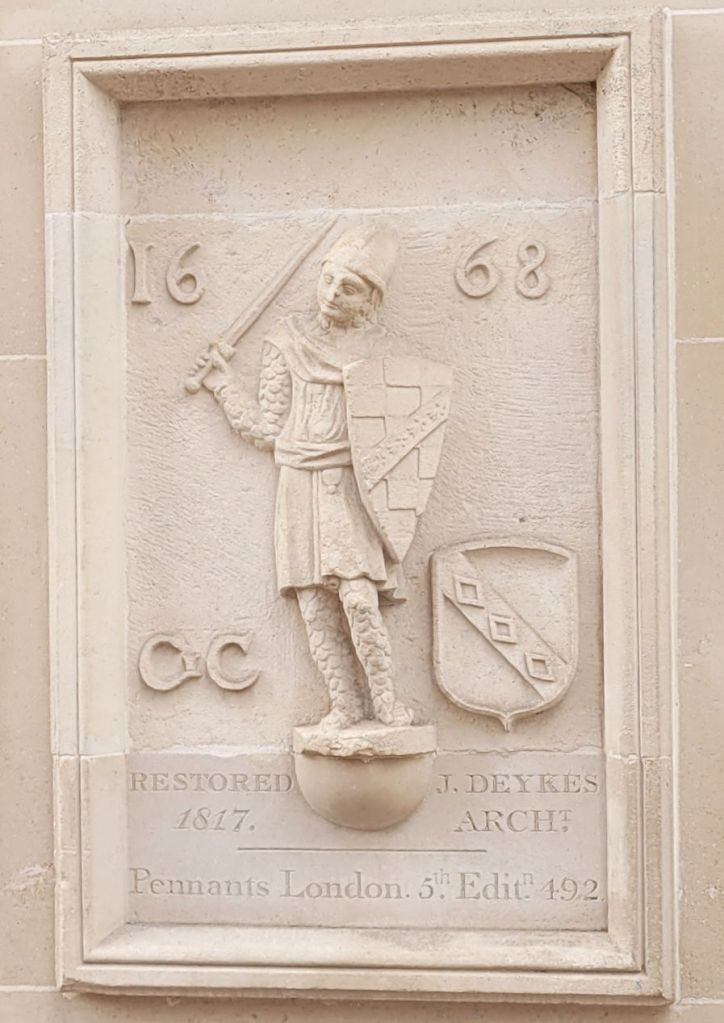
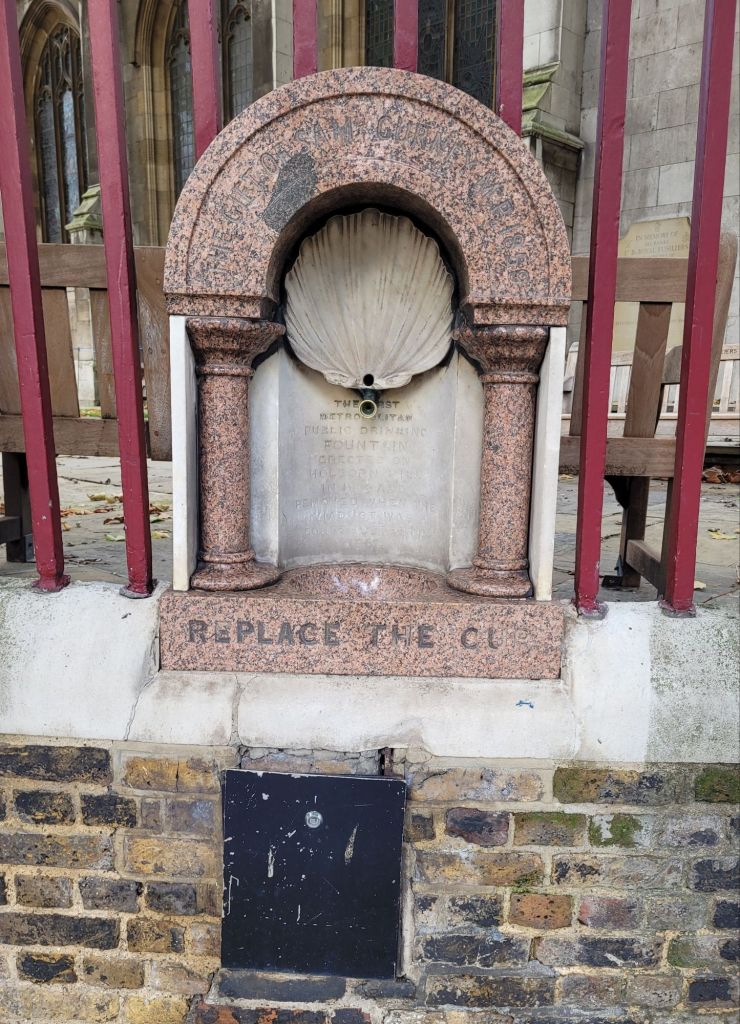
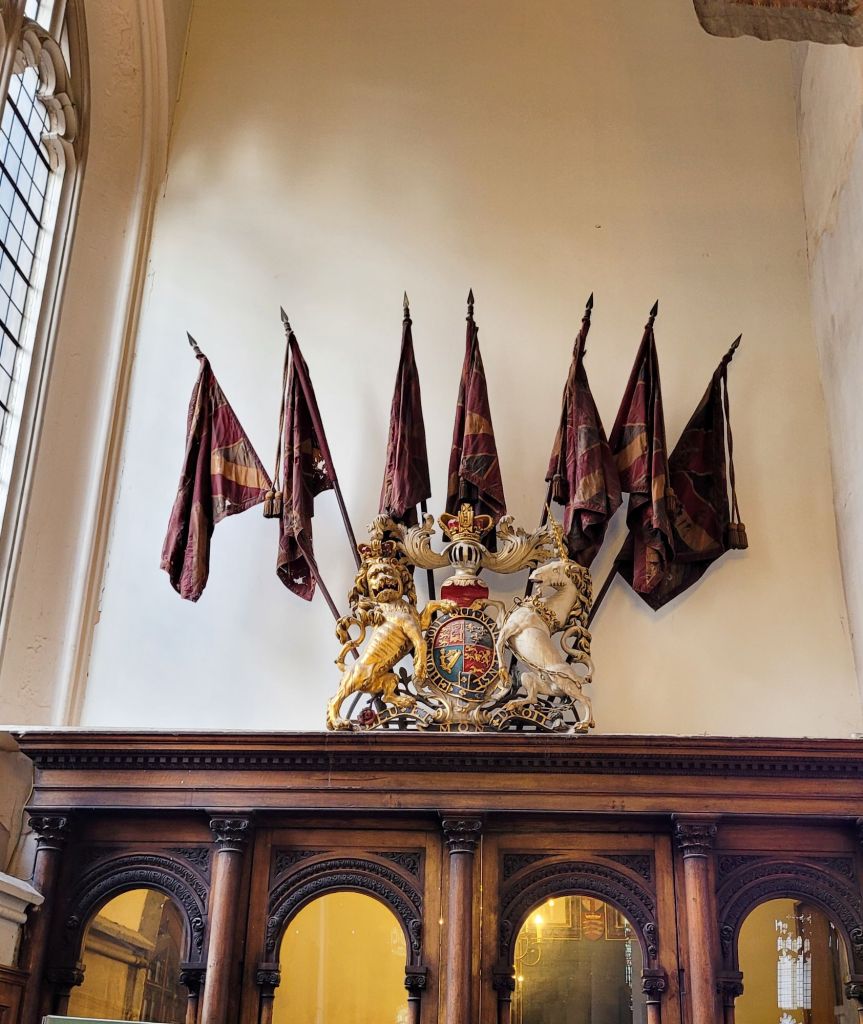
Reaching Newgate Street I banked to the left & moseyed quite amiably to the Viaduct Tavern. Having been led to believe that there were actual cells from the former Newgate Prison located under this very licensed premises, I entered within only to discover that they had a limited supply of ales on tap, having had a pump malfunction. I left at this point & decided to complain to a higher power about this absolute travesty in the Holy Sepulchre Church next door. Once inside my thoughts of refreshment faded into insignificance as it became highly obvious that part of the church formed the Chapel to the Royal Fusiliers, with many of their ‘Regimental Colours’ displayed in the ceiling space above (A ‘Colour’ BTW is a sacred flag which honours the various battles a Regiment has fought in (think Trooping the Colour)). This historic regiment within the British Army was first raised at the Tower of London in 1685 to safeguard the arsenal of weapons & gunpowder contained within. According to the Regimental museum website (www.fusiliermuseumlondon.org/history) a ‘fusil’ refers to a flintlock musket that they were armed with. I must say that it was a rather sobering experience to see the Colours with signs of battle damage hanging above.
The church itself, & the land all around in fact, had a quite an interesting yet sordid & morbid history to tell. Between the Church of St Sepulchre-without-Newgate (as it was once known) & Newgate Prison (now The Old Bailey directly opposite), was a site of public execution & the tolling of the church bell would inform the locals of an impending dispatching. From 1783 to the time public executions were abolished in 1868, it is believed that 1130 people had felt the hangman’s noose around their neck at that very location. But that is not all, oh no, for located on a pillar inside the church is a little box with a handbell contained within. This is a replica of the bell used to give 12 solemn towles (not towels or even trowels as spell check keeps suggesting I amend it to) to awaken the condemned in their cell at midnight, where upon a verse was recited 3 times:
All you that in the condemned hole do lie,
Prepare you, for tomorrow you will die.
Watch all, and pray, the hour is drawing near
That you before the Almighty must appear.
Examine well yourselves, in time repent,
That you may not to eternal flames be sent.
And when St Sepulchre’s Bell in the morning toll,
The Lord above have mercy on your souls.
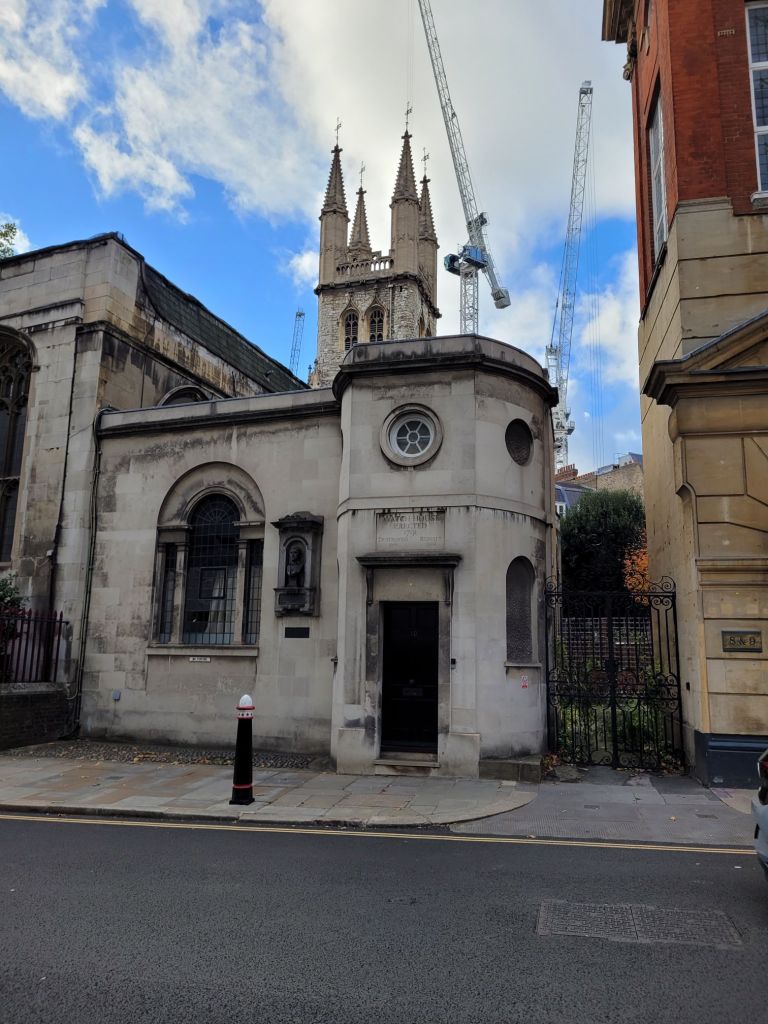
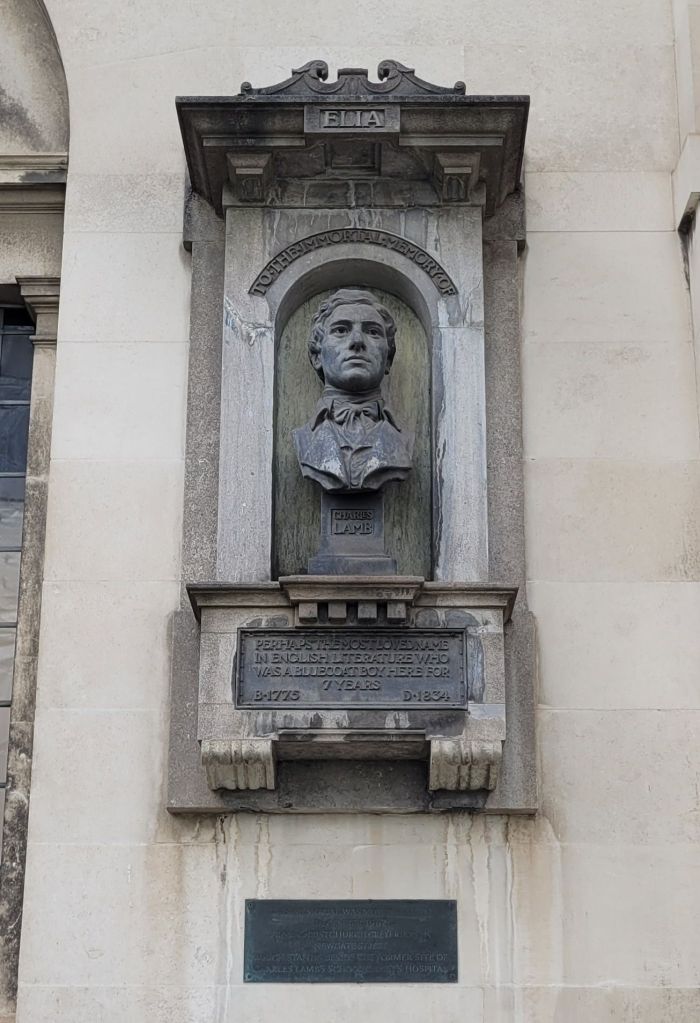
Half tempted to open the box & give the bell a good clang, I thought better of it & decided to continue my wander. Outside the grounds & avoiding any mobs still loitering in anticipation of an execution, I skirted around the perimeter onto Giltspur Street, where I spied a little building with the words ‘Watch House’ inscribed above the door. This, I learnt, was a precursor to a modern-day Police Station & would of at one time housed security guards who protected the graveyard from ‘London Burkers’, grave robbers modelled in the stylie of Burke & Hare (well-known body snatchers in Scotland), who would dig up fresh corpses & sell them to St Bartholomew’s Hospital directly opposite. How delightful. In a more temporarily cheerful note, to the side of the Watch House door was a bust of Charles Lamb, the English essayist, poet & antiquarian. (I could, if I could be bothered, also mention about the Peasants Revolt that occurred in Giltspur Street in 1381, but I won’t).
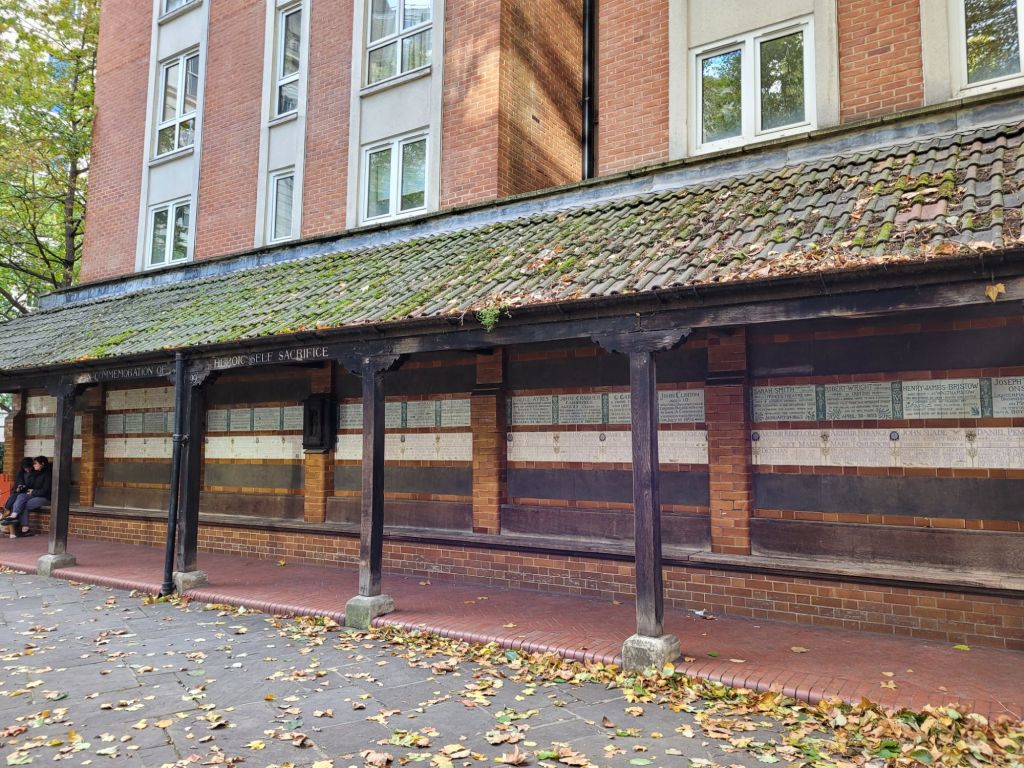
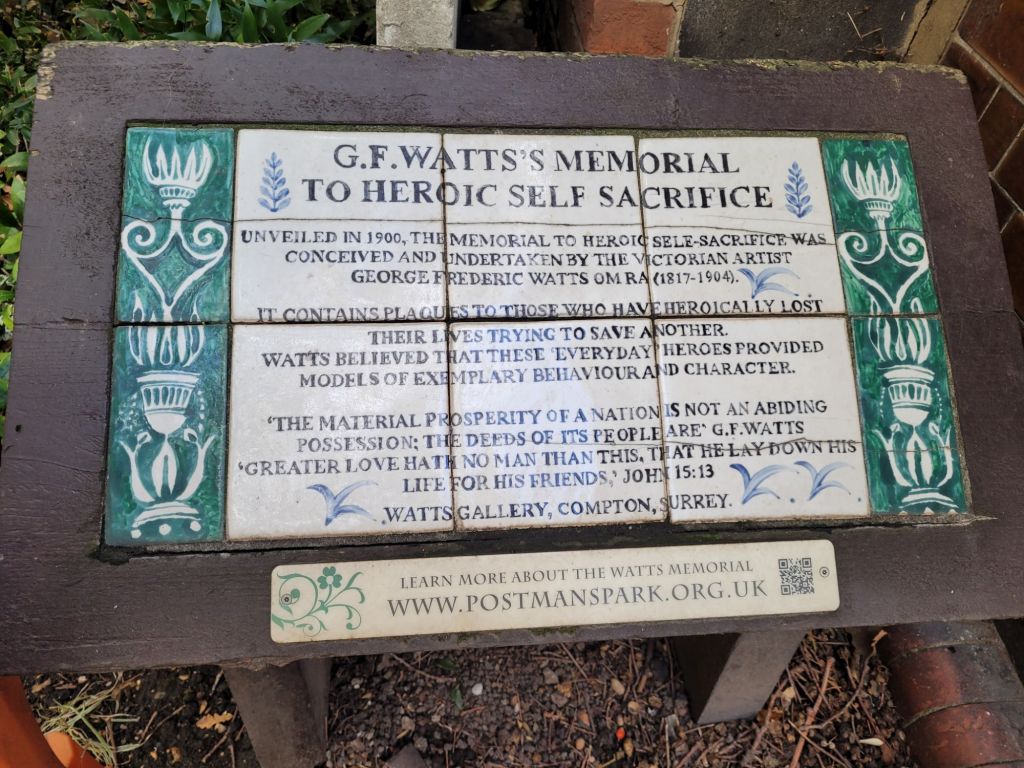
Feeling now in need of something a tad less depressing & a good sit down to rest my aching plates (plates of meat = feet in the local lingo), I found a quiet little patch of green nearby called Postman’s Park on King Edward Street. Tucked away at the back of the park I discovered a shed-like structure that covered a thing called the ‘Memorial to Self-sacrifice’. On the wall were descriptions about those heroic sorts who died whilst saving the lives of others & although somewhat macabre & harrowing, especially as there are descriptions about children who forewent their own lives to save their friends or siblings, the memorial made for an interesting visit.
With the evening fast approaching, I decided it was time to aim myself in downhill direction & towards a very well-deserved pint of the black stuff in the Samuel Pepys Pub overlooking the River Thames. To understand about what happened next, I would suggest that perusing the previous article…

 The Dawdler
Letters to the editor